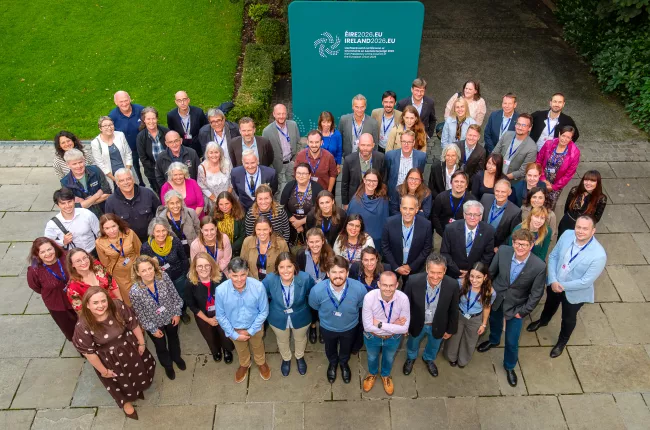
On 15 October 2026, the European Commission hosted a high-level policy dialogue on the role of forest-based value chains in the EU’s climate transition. Commissioner for Climate, Net Zero and Clean Growth Wopke Hoekstra brought together representatives of forest owners and managers, and the pulp and paper sector. Cabinet members of Commissioners Jessika Roswall and Christophe Hansen also participated. The Confederation of European Forest Owners (CEPF) was represented by its President, Sven-Erik Hammar.
The dialogue focused on enabling investment in the long-term resilience and competitiveness of the forest-based sector and maximising its contribution to the EU’s climate objectives, competitiveness and strategic autonomy. Discussions covered the business opportunities associated with the Carbon Removals and Carbon Farming (CRCF) certification framework, the proposed integration of permanent carbon removals into the EU Emissions Trading System (EU ETS), and the forthcoming proposal on national climate targets and flexibilities for the post-2030 period.
CEPF calls for realistic targets and policies that support sustainable and active forest management
Speaking on behalf of European forest owners, Mr Hammar stressed the need to safeguard long-term forest health, resilience and growth. These are essential to mobilising wood for the bioeconomy, reducing fossil emissions and dependence on fossil resources, and ensuring that forests can continue to provide multiple ecosystem services. He underlined that active and sustainable forest management is essential to adapting forests to climate change.
Mr Hammar outlined CEPF’s priorities across three key policy areas.
1) LULUCF: realistic and flexible post-2030 targets
Regarding the Land Use, Land Use Change and Forestry (LULUCF) Regulation, CEPF called for a revision of the current framework. Mr Hammar stressed that the current approach, focused on maximising the carbon sink within forests and relying on fixed targets, has proven inadequate. For the post-2030 period, targets should be realistic, flexible and set at Member State level.
He also stressed that the revised framework should better account for the substitution effect of wood-based products, which can significantly reduce Europe’s dependence on fossil resources.
2) CRCF: voluntary certification that supports diverse forest management practices
On the CRCF framework, Mr Hammar emphasised that certification alone cannot establish a viable business model. This requires genuine market demand from buyers willing to pay for carbon removals. The role of the CRCF is to build credibility and trust.
CEPF considers the framework a useful tool provided that it remains voluntary and market-based. Its forest management methodology should accommodate a wide range of management practices, allow room for innovation and ensure that harvesting can take place.
3) Forest resilience: combining mitigation and adaptation
Addressing forest resilience, Mr Hammar underlined that responding to climate change requires both mitigation and adaptation. Setting forests aside is not a way forward. Given the uncertainties surrounding the future availability, species composition and quality of wood, not only forests but the whole forest-based value chain must prepare now to make use of the wood that tomorrow’s forests will provide.
In his conclusion, Mr Hammar stated:
“To continue providing the multiple ecosystem services expected from forests, including a growing bioeconomy and a durable sink, we need sustainable, active and well adapted forest management.”