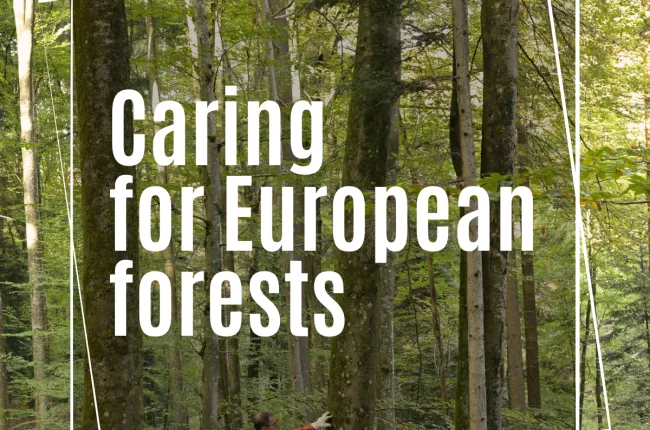
Forests play a fundamental role in supporting economies, livelihoods and well-being worldwide. They provide essential resources, generate employment and deliver ecosystem services that underpin productivity across multiple sectors. Ensuring their sustainable management remains key to maintaining these benefits over time.
In 2026, the International Day of Forests focuses on the theme “Forests and Economies,” highlighting the contributions of forests to sustainable and inclusive economic systems. Forests support livelihoods for billions of people globally and, for many rural and forest-dependent communities, represent a primary source of income, energy, nutrition and resilience, particularly in times of economic or environmental stress.
Beyond their direct economic outputs, forests function as natural infrastructure. They regulate climate, secure water resources, protect soils and reduce disaster risks, supporting productivity across agriculture, energy systems, industry and urban development. These ecosystem services contribute to long-term economic stability while safeguarding natural capital for present and future generations.
In Europe, forests are a key component of the bioeconomy and provide renewable raw materials for a wide range of industries. The forest-based sector in the EU provides over 3.5 million jobs, generates more than €520 billion in annual turnover and contributes around €130 billion in added value. These activities sustain value chains across construction, packaging and other bio-based industries, contributing to the transition towards a circular and climate-neutral economy.
Forests are particularly important for rural areas, where they support employment and contribute to local income. They also act as buffers during periods of crisis, providing essential resources that help communities cope with economic or environmental challenges and maintain resilience over time.
Despite their wide-ranging contributions, forests are often undervalued in economic decision-making and remain underfinanced. Current levels of investment are insufficient to halt deforestation and forest degradation globally, or to fully unlock the potential of forests in supporting sustainable development.
Across Europe, forest owners manage their forests with multifunctional objectives, balancing economic, environmental and social functions. Sustainable forest management continues to evolve in response to new knowledge, changing conditions and societal expectations, with ongoing efforts to improve practices, strengthen cooperation across the value chain and increase engagement with stakeholders.
The International Day of Forests 2026 provides an opportunity to recognise the role of forests in supporting resilient and sustainable economies. Improving their integration into economic planning and increasing investment in sustainable management will be important to ensure that forests continue to deliver benefits for future generations.
Read more: https://www.fao.org/international-day-of-forests/en
The “International Day of Forests” was first established by the decision of the United Nations General Assembly on 28 November 2012. It is celebrated every year on March 21st, uniting two international commemorations: the “World Forestry Day” and “Forest Day”.